Protect Your People, Secure Your Business:

Investing in UK workplace safety training is crucial for any organisation looking to improve employee safety and reduce workplace accidents.
- Introduction: Beyond Compliance – Why Health & Safety is Your Greatest Business Asset
- The Unseen Risks: Top Workplace Injuries in the UK and How to Prevent Them
- The Core Analysis: Why Do Businesses Neglect Safety Training? Debunking Dangerous Myths
- The Strategic Imperative: Why Investing in Training is Your Smartest Business Move
- Your Action Plan: Partner with OHSS for Tailored Health & Safety Solutions in Widnes & Beyond
- Introduction: Beyond Compliance – Why Health & Safety is Your Greatest Business Asset
- The Unseen Risks: Top Workplace Injuries in the UK and How to Prevent Them
- The Core Analysis: Why Do Businesses Neglect Safety Training? Debunking Dangerous Myths
- The Strategic Imperative: Why Investing in Training is Your Smartest Business Move
- Your Action Plan: Partner with OHSS for Tailored Health & Safety Solutions in Widnes & Beyond
Introduction: Beyond Compliance – Why Health & Safety is Your Greatest Business Asset
In the 2023/24 period alone, over 60,000 employee injuries were formally reported by employers in Great Britain, with self-reports from workers suggesting the true figure is closer to 604,000. This stark reality underscores a critical truth for every UK business owner: workplace accidents are not a remote possibility; they are a daily reality. Complying with UK law, principally the Health and Safety at Work Act 1974, is the absolute minimum standard and is entirely non-negotiable.
However, the smartest leaders understand that effective health and safety training is not about ticking a legal box. It is a strategic investment that protects your most valuable asset—your people—while simultaneously boosting productivity, enhancing your reputation, and safeguarding your company’s very future.
For businesses in Widnes and across the North West, understanding these obligations is the first step toward building a resilient and responsible organisation. This guide will not only clarify your duties but also show you how expert partners like OHSS (Occupational Health & Safety Solutions) can help you forge a robust safety culture that pays dividends.
The Unseen Risks: Top Workplace Injuries in the UK and How to Prevent Them
Understanding the most common hazards is the first step toward mitigating them. Data from the Health and Safety Executive (HSE) provides a clear picture of where the greatest risks lie in UK workplaces. Effective, targeted training is the most powerful tool to address these dangers head-on.
Data Source: HSE, Non-fatal injuries reported under RIDDOR 2023/24
Slips, Trips, and Falls (31%)
Common Causes: These incidents, the single largest cause of non-fatal injuries, often stem from preventable issues like wet or contaminated floors, cluttered walkways, poor lighting, and trailing cables.
Prevention & Training Link: This is where foundational health and safety awareness training is vital. It instils a culture of good housekeeping, teaches staff to identify and report hazards, and forms the basis of effective risk assessments. A clean, organised workplace is a safe workplace.
Handling, Lifting, or Carrying (17%)
Common Causes: Back injuries, sprains, and strains are frequently caused by incorrect lifting techniques, attempting to move loads that are too heavy or awkward, and repetitive, strenuous movements.
Prevention & Training Link: The solution is direct and highly effective: accredited Manual Handling Training. A professional course, such as those offered by OHSS, teaches employees the correct kinetic lifting techniques to protect their bodies, assess loads, and use mechanical aids where necessary. This is essential for roles in logistics, construction, manufacturing, and even office environments.
Struck by Moving Object (10%)
Common Causes: This category includes injuries from falling items from shelves, unsafe vehicle operation (e.g., forklifts in a warehouse), and contact with moving machinery parts.
Prevention & Training Link: Prevention requires a multi-faceted approach. It involves regular workplace safety inspections to ensure racking is secure and machinery is guarded, training on the importance of Personal Protective Equipment (PPE), and specialised equipment courses for operators of vehicles like forklifts.
Falls from a Height (8%)
Common Causes: Despite being less frequent, these incidents often result in the most severe injuries. Common causes include unsafe ladder use, working on scaffolding without proper guardrails, and stepping onto fragile roofs or surfaces.
Prevention & Training Link: Specialised Working at Height training is a legal requirement for anyone undertaking such tasks. This training covers how to properly assess risks, select and inspect the right equipment (e.g., ladders, harnesses), and work safely to prevent a fall.
Acts of Violence (9%)
Common Causes: Staff who work with the public, handle cash, or work alone are at a higher risk of physical or verbal assault.
Prevention & Training Link: Training in de-escalation techniques can equip staff with the confidence to manage difficult situations. Furthermore, investing in Mental Health First Aid training helps create a supportive environment where the stress and psychological impact of such incidents can be managed effectively.
The Core Analysis: Why Do Businesses Neglect Safety Training? Debunking Dangerous Myths
Despite the clear legal requirements and obvious risks, many businesses still fail to invest adequately in health and safety training. This reluctance is often rooted in a series of dangerous myths and misconceptions. Here, we dismantle these arguments with the hard facts.
Myth 1: “It’s too expensive and we don’t have the budget.”
The Flawed Logic: This view focuses solely on the upfront cost of a training course while ignoring the astronomical costs of failure.
The Reality Check: The cost of inaction is catastrophic. According to industry reports, the average court fine for a health and safety breach is around £150,000—a sum that could cripple most SMEs. This doesn’t include legal fees, increased insurance premiums, or the hidden costs of lost productivity, sick pay, hiring temporary staff, and management time spent on accident investigations.
Investing in a cost-effective on-site training session with a provider like OHSS in Widnes is a fraction of the cost of a single serious incident. It’s not an expense; it’s insurance against financial ruin.
Myth 2: “We’re too busy to stop work for training.”
The Flawed Logic: This prioritises short-term output over long-term operational stability and resilience.
The Reality Check: A serious accident can shut down a worksite for days, or even weeks, for an official HSE investigation. This level of disruption is far greater than the few hours required for a training course. Furthermore, untrained staff are more likely to work inefficiently, make mistakes that damage equipment, and cause unplanned downtime.
Flexible providers like OHSS offer on-site training across the UK and virtual classroom options, designed to fit around your operational schedule and minimise disruption to your business.
Myth 3: “It’ll never happen to us. We’re a small/low-risk business.”
The Flawed Logic: This reflects a dangerous complacency and a fundamental misunderstanding of the law. The “it’ll never happen to us” mentality is a precursor to disaster.
The Reality Check: The law is universal. The Health and Safety at Work Act 1974 applies to all employers, from a multinational construction firm to a five-person office. Even “low-risk” environments have significant hazards, including fire, stress, and risks from Display Screen Equipment (DSE). The statistics prove that accidents are common across all sectors. Most critically, for serious breaches, company directors can face personal prosecution, unlimited fines, and even imprisonment. The responsibility cannot be delegated away.
Key Takeaway
The arguments against health and safety training are based on false economies. The real costs—financial, operational, and personal—lie in neglect. Proactive training is the only logical and responsible path
The Strategic Imperative: Why Investing in Training is Your Smartest Business Move
Shifting from a mindset of fear to one of opportunity reveals the true value of health and safety training. It is not a burden to be endured, but an investment that delivers a clear and powerful return.
Achieve Bulletproof Legal Compliance
- Action: Fulfill your legal duties under HSE regulations by providing adequate information, instruction, and training.
- Value: Operate with confidence, knowing you are protected from crippling fines and legal challenges. Pass HSE inspections and client audits with ease, demonstrating your professionalism and commitment to the law.
Boost Productivity and Your Bottom Line
- Action: Empower your staff with the skills and knowledge to work safely, efficiently, and competently.
- Value: A well-trained workforce is a motivated and effective one. You will see a reduction in absenteeism from injuries, lower staff turnover as employees feel valued and protected, and minimised downtime from accidents and errors. This all translates directly to a healthier bottom line.
Build an Unbeatable Reputation
- Action: Cultivate a strong, positive safety culture that clearly demonstrates you value your employees’ well-being above all else.
- Value: In today’s market, reputation is everything. A strong safety record makes you an employer of choice, helping you attract and retain top talent. It allows you to win contracts with larger clients who demand high safety standards from their supply chain. By becoming a leader in workplace safety, you build trust with your customers, your community, and your team, positioning your business as a benchmark for excellence in Widnes and the wider North West.
Your Action Plan: Partner with OHSS for Tailored Health & Safety Solutions in Widnes & Beyond
Understanding the need for training is the first step. The next is choosing the right partner. You need accredited experts who understand the unique challenges of your industry and can deliver practical, engaging training that makes a real difference.
Who We Are: Your Local Experts in Widnes
Based in the heart of the North West in Widnes, OHSS (Occupational Health & Safety Solutions) are your local, accredited experts. We provide practical health and safety training and consultancy to businesses of all sizes across the region, including Liverpool, Manchester, Cheshire, and offer services nationwide.
Step 1: Get in Touch for a No-Obligation Consultation
Every business is different. That’s why we start by listening. Contact our friendly team to discuss your specific business needs, challenges, and goals. We’ll help you identify your legal requirements and recommend the most effective and cost-efficient solutions.
Ready to take the first step?
Call us today on 0151 374 0355 or fill out our contact form at www.ohss.co.uk.
Step 2: Choose the Right Service for Your Business
We offer a comprehensive suite of accredited courses and consultancy services, all of which can be tailored to your needs and delivered on-site at your premises or at one of our training centres.
| Service Category
|
Key Offerings
|
|---|---|
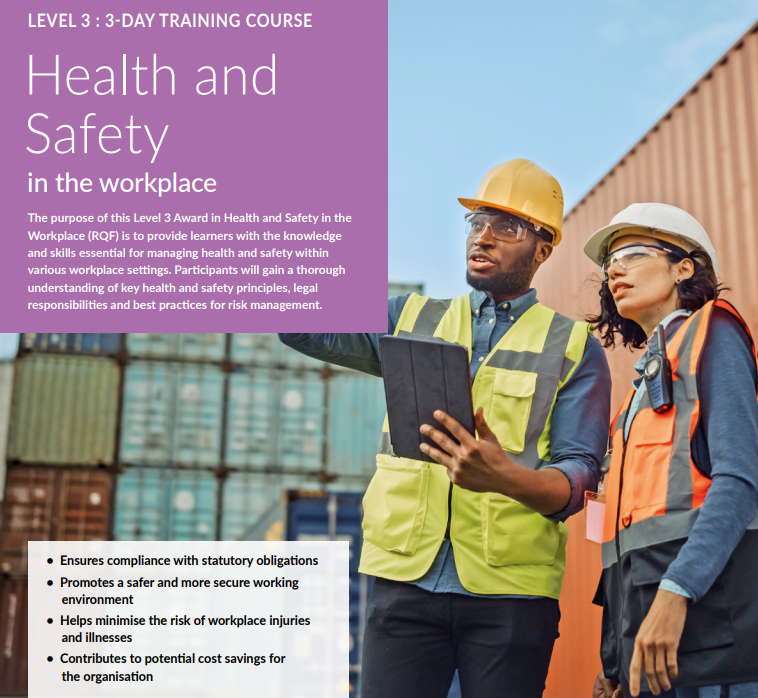
| Health & Safety Training | IOSH Managing Safely & Working Safely, FAA Level 3 Award in Health & Safety in the Workplace, Manual Handling, Risk Assessment, COSHH Training. |
| First Aid & Fire Safety Courses | First Aid at Work (FAW), Emergency First Aid at Work (EFAW), Paediatric First Aid, Fire Safety & Fire Warden/Marshal Training. |
| Mental Health Training | FAA Awards in First Aid for Mental Health (Levels 1-3), including courses specifically for Youth Mental Health. |
| Expert Consultancy Services | Workplace Risk Assessments & Audits, Fire Risk Assessments, Health & Safety Policy Development, Accident Investigations, and Competent Person Support. |